
News
Sion sous les étoiles 2026 : les coulisses d’un dispositif technique d’envergure
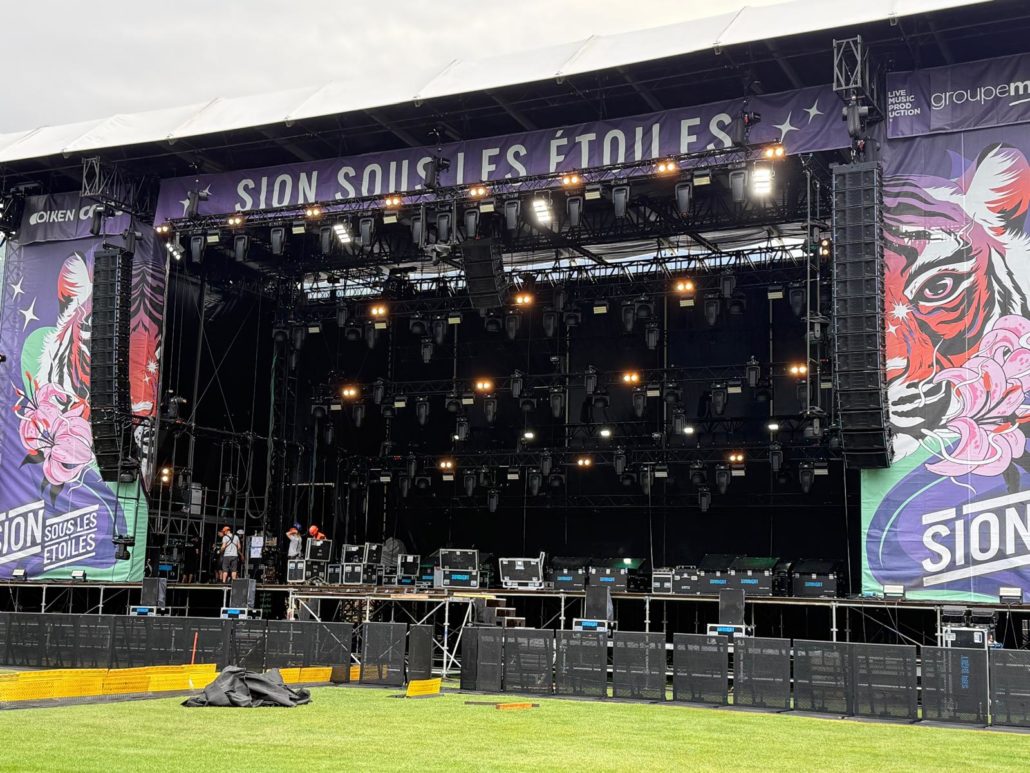
La Plaine de Tourbillon accueille cette année la 11ᵉ édition du Festival Sion sous les étoiles. Pendant trois soirées, artistes et public se retrouvent à Sion autour d’une programmation musicale qui transforme le site en véritable scène à ciel ouvert.
En coulisses, l’organisation d’un tel rendez-vous repose sur plusieurs jours de préparation et sur la coordination de nombreux métiers. Pour cette nouvelle édition, les équipes SKYNIGHT assurent le déploiement et l’exploitation d’un dispositif technique réunissant le son, la lumière, la vidéo, le rigging, les réseaux et la distribution électrique.
Bien avant l’ouverture des portes, les techniciens interviennent pour installer les structures, raccorder les équipements, programmer les systèmes et effectuer l’ensemble des tests nécessaires. Le travail se poursuit ensuite pendant chaque soirée afin d’accompagner les artistes et de garantir le bon fonctionnement des installations.
Au total, l’intervention représente sept jours de présence sur le site, avec jusqu’à 30 personnes mobilisées quotidiennement selon les différentes étapes du festival.
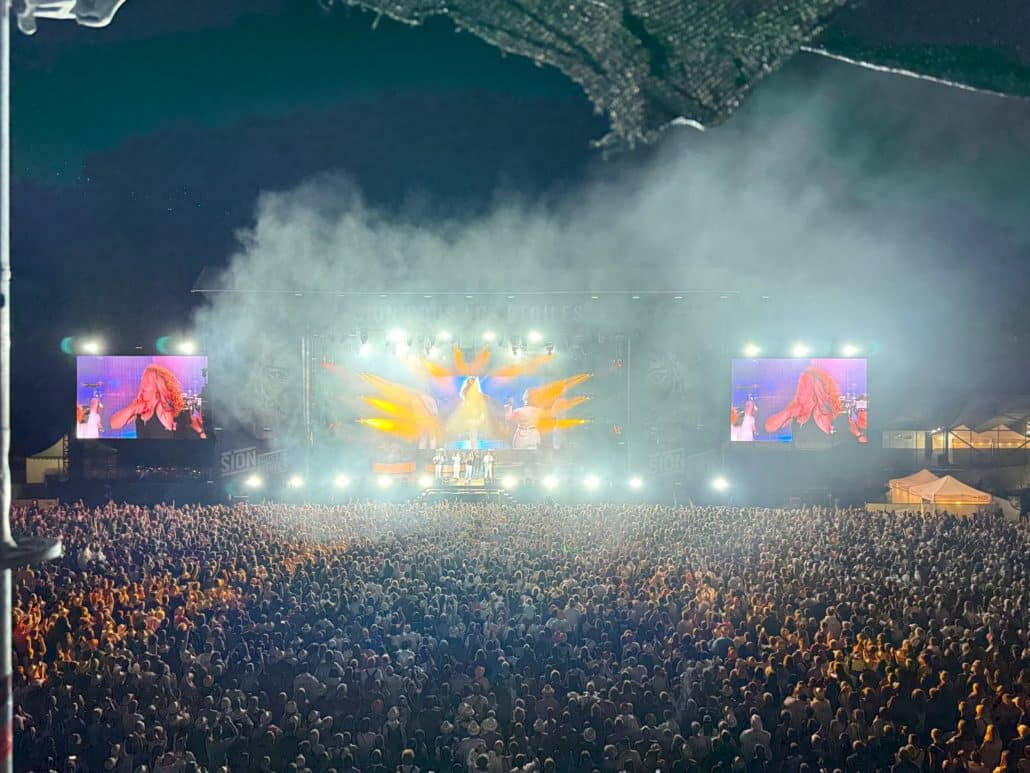
Une nouvelle collaboration avec Live Music Production
Pour Sion sous les étoiles, SKYNIGHT accompagne une nouvelle fois Live Music Production, société organisatrice du festival.
Cette collaboration s’inscrit dans un partenariat de plus de 30 ans entre les deux entreprises. Au fil des années, les équipes ont ainsi travaillé ensemble sur de nombreux événements et productions musicales, en Suisse comme sur d’autres scènes.
Cette continuité facilite la préparation de dispositifs particulièrement exigeants. La connaissance mutuelle des méthodes de travail, des contraintes propres au spectacle vivant et des besoins des productions permet d’anticiper les différentes étapes du projet.
Sur un festival de cette ampleur, la coordination commence bien avant l’arrivée des premiers équipements sur le site. Les plans techniques, les besoins des artistes, les contraintes de la scène et les moyens humains doivent être étudiés en amont afin de construire une installation cohérente.
Les équipes peuvent ensuite organiser le montage, répartir les responsabilités et préparer les systèmes qui seront exploités pendant les trois soirées de concerts.
Sept jours d’intervention autour du festival
La partie visible par le public ne représente qu’une étape du travail réalisé. Pour trois jours d’exploitation, les équipes SKYNIGHT interviennent pendant une semaine complète sur la Plaine de Tourbillon :
- Trois jours de montage, avec 25 personnes mobilisées quotidiennement ;
- Trois jours d’exploitation, également assurés par une équipe de 25 personnes par jour ;
- Une journée de démontage, réunissant entre 25 et 30 personnes.
Chaque phase répond à des objectifs différents, mais toutes nécessitent une coordination étroite entre les équipes du son, de la lumière, de la vidéo, du rigging et de l’alimentation électrique.
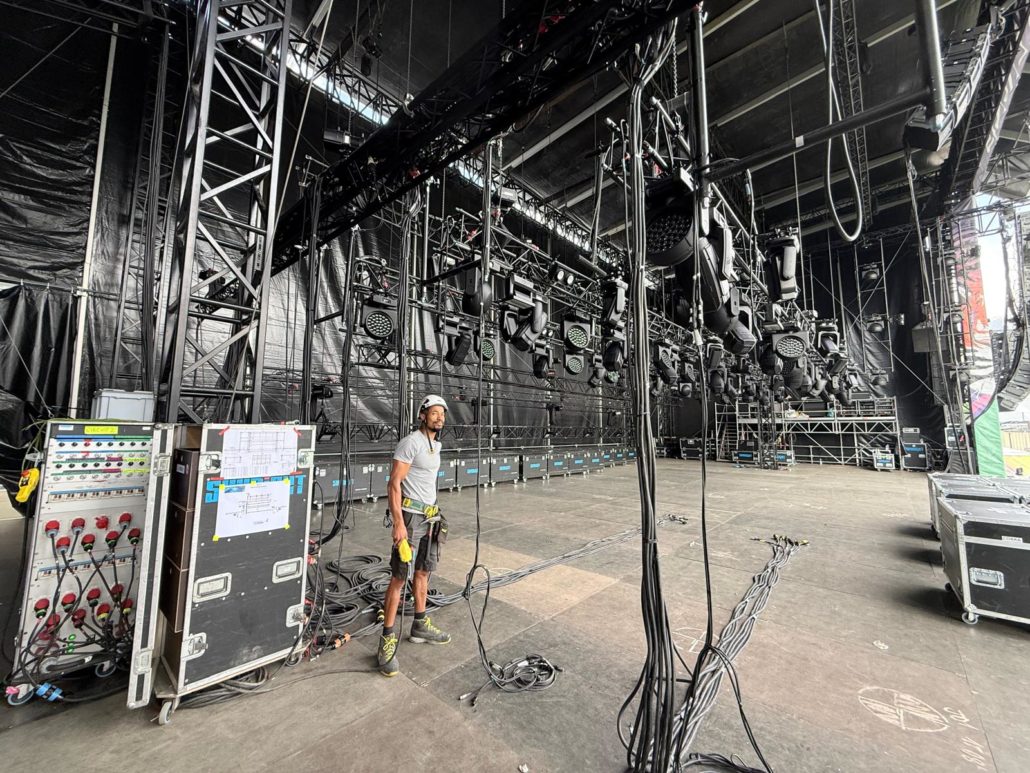
Trois jours pour installer et préparer le dispositif
Le montage commence par la mise en place des structures nécessaires à l’accueil des différents équipements. Les équipes de rigging installent les ponts, les moteurs et les points de suspension qui permettront de positionner les projecteurs, les écrans et les éléments de sonorisation.
Le matériel lumière, audio et vidéo peut ensuite être déployé progressivement. Chaque appareil doit être installé à l’emplacement prévu, sécurisé, alimenté et raccordé aux réseaux de contrôle.
Cette étape comprend également la pose de plusieurs kilomètres de câbles, la mise en place des distributions électriques et la création des réseaux nécessaires au transport des signaux audio et vidéo.
Une fois les équipements raccordés, les équipes procèdent à leur configuration et à leur programmation. Les projecteurs sont adressés et testés, les systèmes son sont réglés, les écrans LED sont calibrés et les équipements vidéo sont intégrés à la régie.
Le visualiseur 3D utilisé pour la lumière permet par ailleurs de préparer une partie de la programmation et de vérifier les positions avant les premières répétitions sur scène.
Trois jours d’exploitation au rythme des concerts
Pendant le festival, 25 personnes restent mobilisées chaque jour pour assurer l’exploitation des installations.
Les techniciens interviennent dès les balances et les répétitions afin d’adapter les systèmes aux besoins de chaque production. Les configurations peuvent varier selon les artistes, les formations musicales et les demandes transmises par leurs équipes techniques.
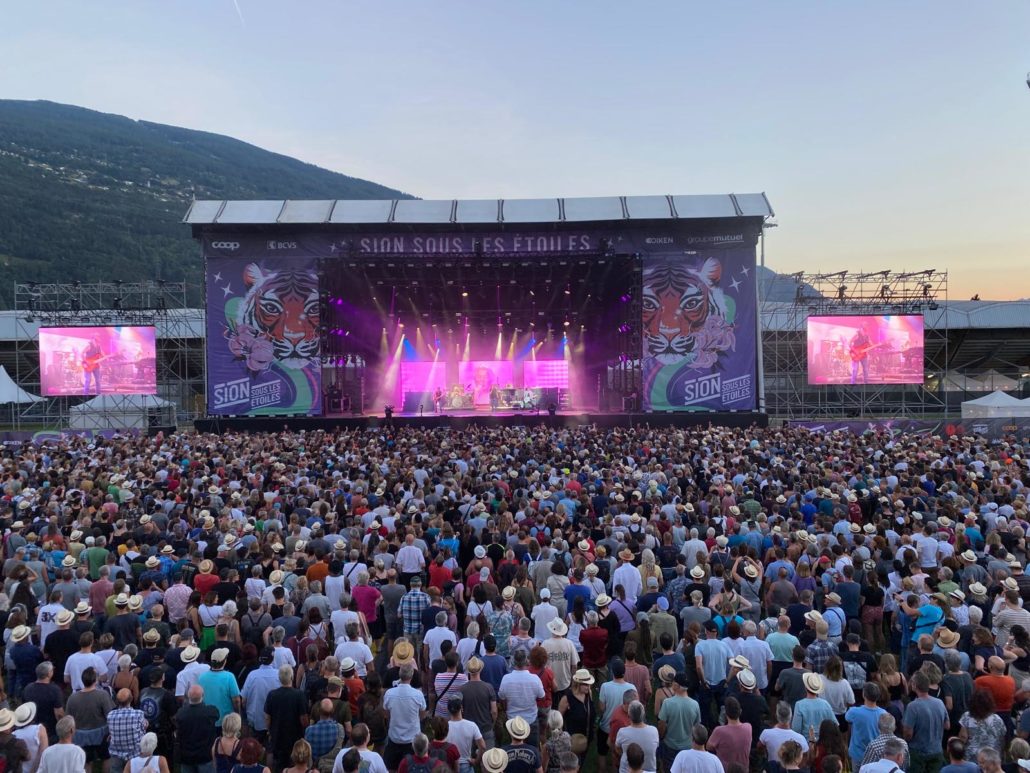
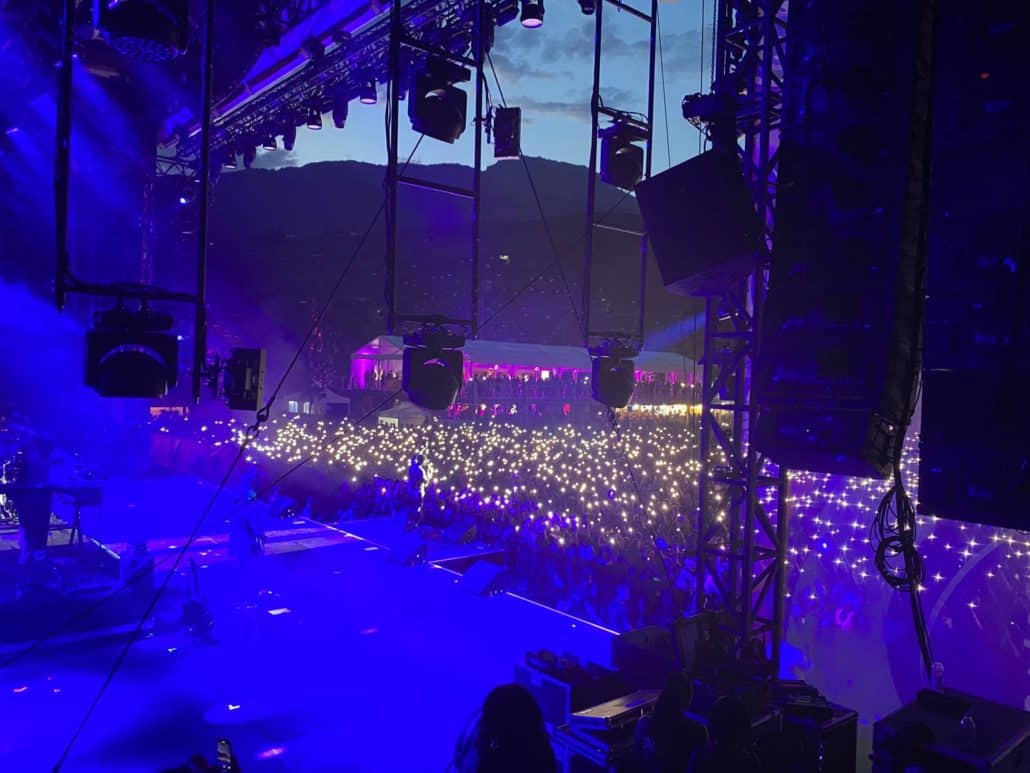
Les régisseurs son contrôlent la diffusion en façade et les retours destinés aux artistes. Les équipes lumière assurent la programmation et l’exécution des différents tableaux. En parallèle, les cadreurs, les opérateurs vidéo et les techniciens LED produisent et diffusent les images sur les écrans installés autour de la scène.
Cette exploitation repose sur une communication permanente entre les différents postes. Le son, la lumière et la vidéo doivent évoluer de manière synchronisée, tout en respectant le déroulement précis de chaque concert.
Des techniciens restent également disponibles pour contrôler les réseaux, les alimentations électriques et les équipements suspendus. Cette présence permet d’intervenir rapidement en cas de besoin, sans interrompre le déroulement du spectacle.
Une journée de démontage prévue après le festival
À l’issue de la dernière soirée, les équipes poursuivront leur intervention avec le démontage complet des installations.
Entre 25 et 30 personnes seront mobilisées pour déposer les équipements, retirer le câblage et démonter les structures installées quelques jours plus tôt. Chaque élément sera contrôlé, conditionné et préparé pour son retour vers les dépôts ou sa prochaine utilisation.
Cette phase demandera la même rigueur que le montage. Les équipements suspendus seront déposés selon un ordre précis, tandis que les différentes équipes coordonneront leurs interventions afin de travailler efficacement et en toute sécurité.
En une journée, la scène et les espaces techniques seront progressivement libérés, venant clôturer une semaine complète d’intervention sur le festival.
Un dispositif lumière conçu pour accompagner chaque artiste
La lumière occupe une place centrale dans la mise en scène des concerts. Elle permet de structurer l’espace, de souligner les temps forts de chaque performance et d’adapter l’ambiance visuelle à l’univers des artistes.
Pour cette 11ᵉ édition de Sion sous les étoiles, les équipes SKYNIGHT ont déployé plus de 250 projecteurs et équipements lumière sur le site.
Le dispositif comprend notamment :
- 30 projecteurs asservis ROBE BMFL Blade, utilisés pour produire des faisceaux précis et travailler les découpes ;
- 62 ClayPaky HY B-EYE K25, permettant d’associer des effets de wash, de beam et de pixel mapping ;
- 14 ROBE iForte, adaptés aux besoins de puissance et de précision sur une scène de grande dimension ;
- 26 Ayrton Cobra, employés pour créer des faisceaux lumineux visibles sur de longues distances ;
- 40 Chauvet Color Strike M, combinant effets de stroboscope et surfaces lumineuses ;
- 36 Briteq BT-Blinder2 IP, complétés par des projecteurs Cameo, Astera, Cromatic et SE Lighting.
Deux poursuites Robert Juliat Lancelot et un système déporté RoboSpot permettent également de suivre les artistes pendant leurs déplacements sur scène.
La mise en lumière est complétée par trois générateurs de brouillard MDG. Le brouillard permet de matérialiser les faisceaux et de renforcer la profondeur des tableaux lumineux, sans masquer les artistes ni gêner la captation vidéo.
L’ensemble du système est piloté depuis trois consoles grandMA3 light. Elles permettent aux opérateurs de programmer les effets, de préparer les différentes séquences et de s’adapter aux demandes des équipes artistiques pendant les répétitions comme durant les concerts.
En amont de l’événement, le recours à un visualiseur 3D facilite la préparation de la programmation. Les équipes peuvent ainsi simuler les positions, les couleurs et les mouvements avant la mise en service complète du dispositif sur le site.
À cette installation s’ajoutent le câblage, la distribution électrique et le rigging nécessaires pour alimenter, contrôler et suspendre les différents équipements en toute sécurité.
Une couverture sonore Meyer Sound pour la scène et le Village
Le système de sonorisation a été dimensionné pour assurer une couverture homogène de la Plaine de Tourbillon, tout en conservant la précision nécessaire aux productions musicales accueillies pendant le festival.
La diffusion principale repose sur un dispositif Meyer Sound composé de :
- 32 enceintes Panther L ;
- 20 enceintes Panther W ;
- 24 subwoofers 1100-LFC ;
- 10 enceintes UPQ-1P.
Les Panther L et W sont réparties afin de couvrir les différentes zones du public. Les subwoofers viennent renforcer les basses fréquences, tandis que les UPQ-1P complètent la diffusion dans les espaces nécessitant une couverture supplémentaire.
Le système est exploité à partir de deux consoles numériques, une Yamaha DM7 et une Yamaha QL1, associées à une interface Dante. Ce réseau permet de transporter les signaux audio entre les différentes régies et les équipements tout en limitant le nombre de liaisons analogiques.
Des équipements adaptés aux artistes et aux productions
La partie dédiée aux artistes comprend également :
- 12 micros HF main ;
- 8 micros serre-tête Shure Axient ;
- un kit Ear Monitor prévu pour 12 personnes ;
- des kits de microphones adaptés aux groupes ;
- un kit spécifique pour les DJ.
Ces équipements sont préparés en fonction des fiches techniques reçues en amont. Pendant les balances, les équipes ajustent les niveaux, les retours et les fréquences afin de répondre aux besoins de chaque formation.
La coordination avec les régisseurs et techniciens des artistes permet d’intégrer rapidement les différentes configurations, même lorsque les changements de plateau doivent être effectués dans des délais réduits.
Une diffusion dédiée au Village
Le Village du festival bénéficie de son propre dispositif sonore. Celui-ci repose sur 12 enceintes Meyer Sound Lina et un subwoofer 2100-LFC.
Cette installation permet de sonoriser cet espace indépendamment de la scène principale et d’adapter les niveaux à son usage spécifique.
Comme pour la Main Stage, le dispositif comprend le câblage, les réseaux, la distribution électrique et les éléments de rigging nécessaires à son exploitation.
Près de 200 m² d’écrans LED et une captation en 4K
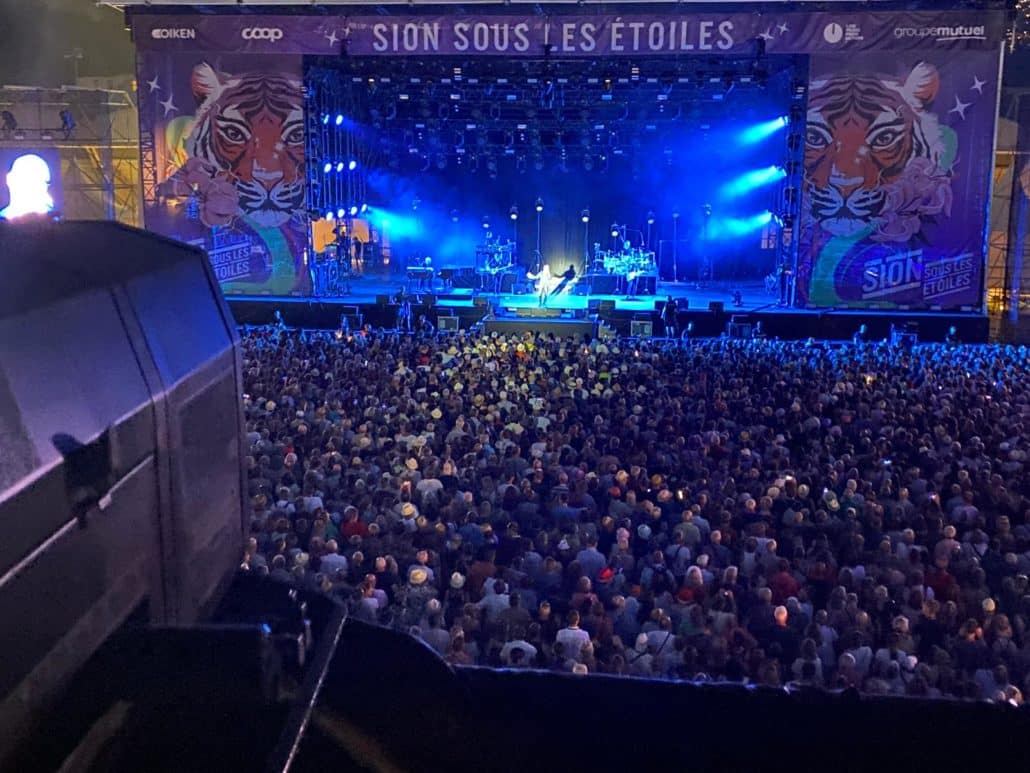
La vidéo permet au public de suivre les artistes, y compris depuis les zones les plus éloignées de la scène. Elle contribue également à l’identité visuelle des concerts en diffusant les images captées en direct, les contenus graphiques et les éléments préparés par les productions.
Le dispositif installé à Sion sous les étoiles représente près de 200 m² d’écrans LED.
Il se compose de quatre surfaces principales :
- un écran latéral gauche de 8 mètres sur 5 mètres ;
- un écran latéral droit de 8 mètres sur 5 mètres ;
- un écran IMAG de 5 mètres sur 3 mètres, installé au niveau de la régie face à la scène ;
- un mur LED de fond de scène de 15 mètres sur 7 mètres.
Les deux écrans latéraux utilisent des dalles Artixium Beryl XL 4.8, tandis que l’écran situé en régie repose sur une configuration Artixium Beryl S 4.8.
Le mur de scène est constitué de dalles Artixium Orion 2.0 3.9. Sa définition et sa surface permettent de diffuser des contenus visuels de grande dimension derrière les artistes.
Trois caméras broadcast pour suivre les concerts
La captation est assurée par trois caméras Panasonic AK-UC4000GSJ. Ces équipements broadcast permettent de produire des images en 4K adaptées à une diffusion sur de grandes surfaces LED.
Les cadreurs suivent les artistes et les moments importants des concerts depuis différents points autour de la scène. Les images sont ensuite transmises à la régie, où elles sont sélectionnées et assemblées en direct.
Le dispositif comprend également :
- un mélangeur 4K ;
- un mélangeur Analog Way Aquilon C 4K ;
- un rack de traitement vidéo 4K ;
- un rack de contrôle UCU600 4K ;
- les écrans nécessaires à la supervision en régie.
La diffusion sur les différents murs LED nécessite également un réseau fibre, des systèmes de contrôle, une distribution électrique adaptée et un câblage capable de transporter les signaux sur l’ensemble du site.
Pendant l’exploitation, les équipes vidéo doivent coordonner la captation en direct avec les contenus graphiques et les demandes propres à chaque production. Les images peuvent ainsi évoluer d’un concert à l’autre et s’intégrer à la scénographie préparée par les artistes.
Un peu moins de 100 moteurs pour le rigging de la Main Stage
Le rigging regroupe les structures et les équipements utilisés pour suspendre les systèmes de lumière, de sonorisation, de vidéo et les différents éléments scéniques.
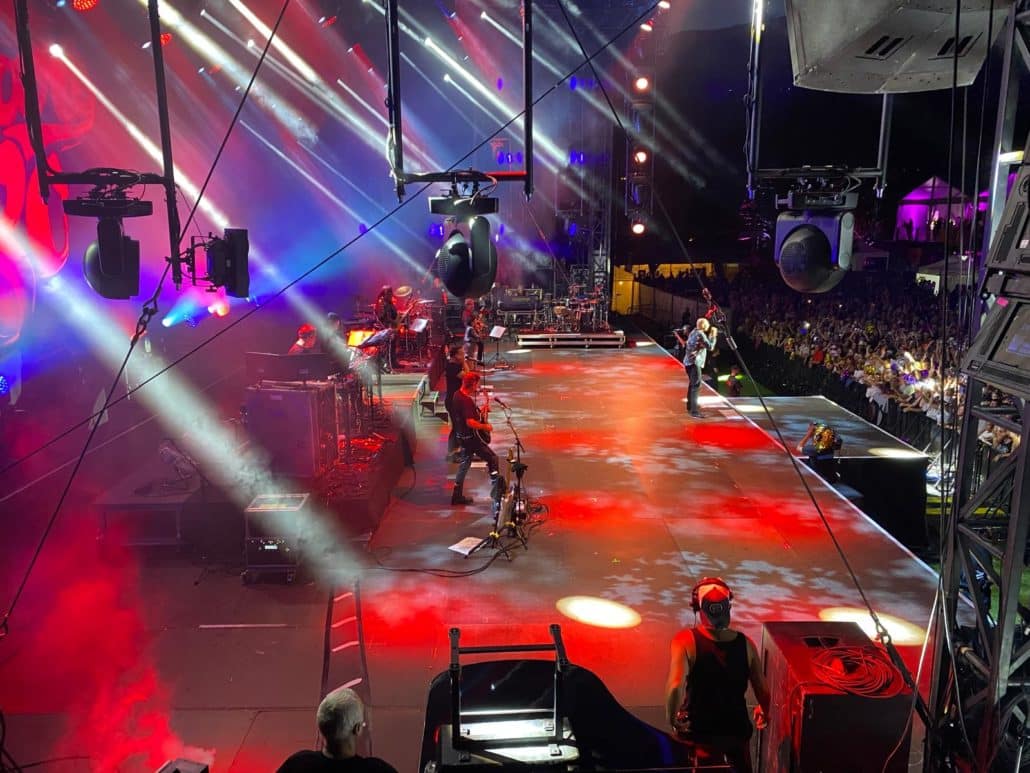
Pour la Main Stage de Sion sous les étoiles, le dispositif comprend un peu moins de 100 moteurs, ainsi que des ponts en sections 300, 400 et 500.
Ces structures doivent accueillir plusieurs tonnes d’équipements réparties au-dessus et autour de la scène. Chaque point de suspension est étudié selon la charge prévue, son emplacement et les contraintes de l’infrastructure.
Les équipes assurent notamment :
- l’installation des moteurs et des ponts ;
- le levage des systèmes son, lumière et vidéo ;
- la mise en place des pendrillons et des rideaux ;
- la distribution électrique nécessaire aux équipements suspendus ;
- le contrôle des différents points pendant le montage et l’exploitation.
Le rigging constitue une partie moins visible du dispositif, mais il joue un rôle déterminant dans l’organisation de la scène. Il permet de positionner les équipements à la hauteur et à l’angle prévus, tout en maintenant les conditions de sécurité nécessaires pendant toute la durée de l’événement.
Son installation doit également être coordonnée avec les autres métiers. Les systèmes sont levés selon un ordre précis afin de permettre aux équipes lumière, son et vidéo de raccorder et de tester progressivement leurs équipements.
Une coordination entre tous les métiers de SKYNIGHT
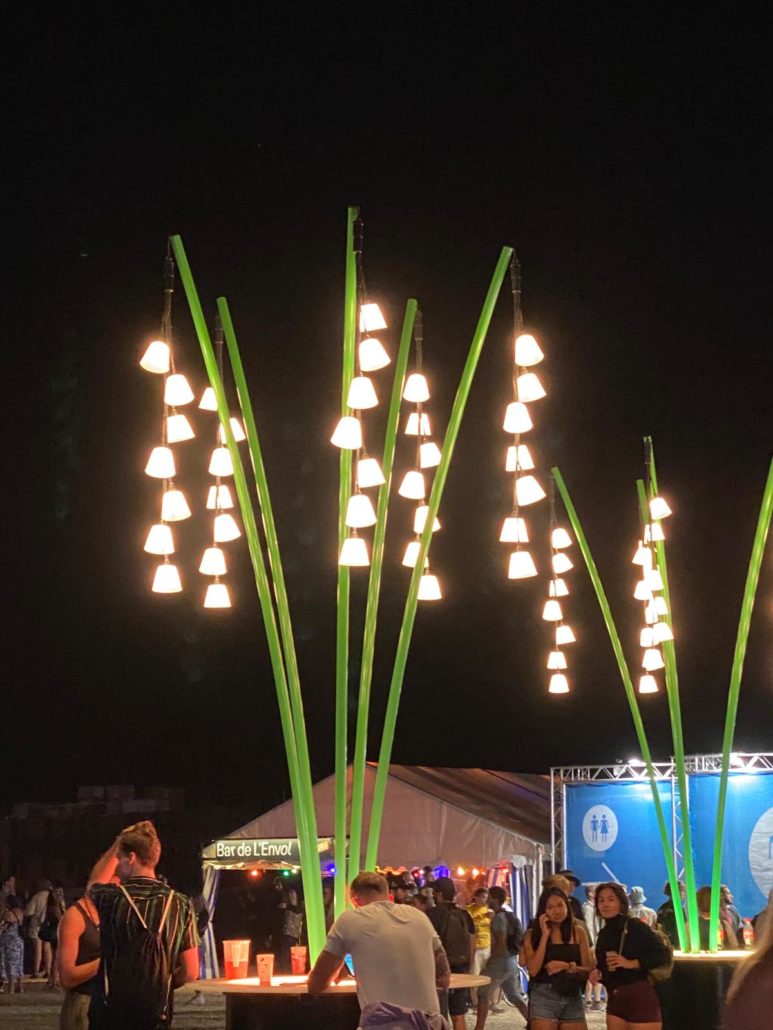
La préparation d’un festival de cette ampleur ne consiste pas seulement à réunir une importante quantité de matériel. Elle repose avant tout sur la coordination des personnes chargées de l’installer et de l’exploiter.
À Sion, plusieurs métiers travaillent simultanément :
- les régisseurs et techniciens son ;
- les opérateurs et techniciens lumière ;
- les cadreurs et les équipes vidéo ;
- les techniciens LED ;
- les spécialistes du réseau et de la distribution électrique ;
- les riggers ;
- les responsables de la coordination technique.
Pendant le montage, chaque équipe doit avancer en tenant compte du travail des autres. Le levage des structures conditionne par exemple l’installation des projecteurs, des enceintes et des écrans. Le câblage doit ensuite être organisé pour relier les équipements aux régies sans gêner les circulations ni les autres installations.
Lors des répétitions, la coordination se poursuit entre les consoles son, lumière et vidéo. Les réglages sont adaptés aux demandes des productions, tandis que les derniers ajustements sont réalisés avant l’arrivée du public.
Pendant les concerts, les équipes restent en communication permanente. Cette organisation permet de suivre le déroulement du spectacle et d’intervenir rapidement si une modification ou une vérification s’avère nécessaire.
Chaque métier conserve ainsi ses propres responsabilités tout en participant à un dispositif commun.
Trois soirées préparées collectivement
Lorsque le public entre sur la Plaine de Tourbillon, l’essentiel du travail de préparation a déjà été réalisé.
Les structures sont en place, les systèmes de diffusion sont réglés, les écrans sont calibrés et les tableaux lumière ont été programmés. Il reste néanmoins à accompagner chaque artiste et à faire évoluer le dispositif en direct pendant les trois soirées.
La sonorisation doit rester homogène sur l’ensemble du site. La lumière suit le rythme des morceaux et les choix scénographiques. Les images captées sont sélectionnées en régie avant d’être diffusées sur les écrans. En parallèle, les équipes surveillent les réseaux, les alimentations électriques et les structures suspendues.
Cette coordination permet de réunir les différentes composantes techniques au service d’une même expérience.
Derrière chaque concert se trouvent ainsi plusieurs jours de préparation, des changements de configuration, de nombreux réglages et une présence continue des équipes sur le terrain.
Plus de 30 ans de collaboration avec Live Music Production
Cette 11ᵉ édition de Sion sous les étoiles s’inscrit dans une collaboration de longue date entre SKYNIGHT et Live Music Production.
Depuis plus de 30 ans, les deux sociétés travaillent ensemble sur des concerts, des festivals et différentes productions musicales. Cette continuité permet de construire des dispositifs adaptés aux besoins de chaque événement et de faire évoluer les solutions techniques au fil des projets.
Tout au long des trois soirées, les équipes restent pleinement mobilisées pour accompagner les artistes, assurer l’exploitation des installations et veiller au bon déroulement de chaque concert.
SKYNIGHT remercie Live Music Production pour sa confiance renouvelée et pour ce partenariat qui dure depuis plus de 30 ans.
Bravo à toutes les équipes techniques et à l’ensemble des personnes mobilisées sur le terrain. Nous souhaitons une très belle suite de festival aux artistes, aux équipes et au public de Sion sous les étoiles.
