News
Production technique du CHI de Genève : accompagner un événement international
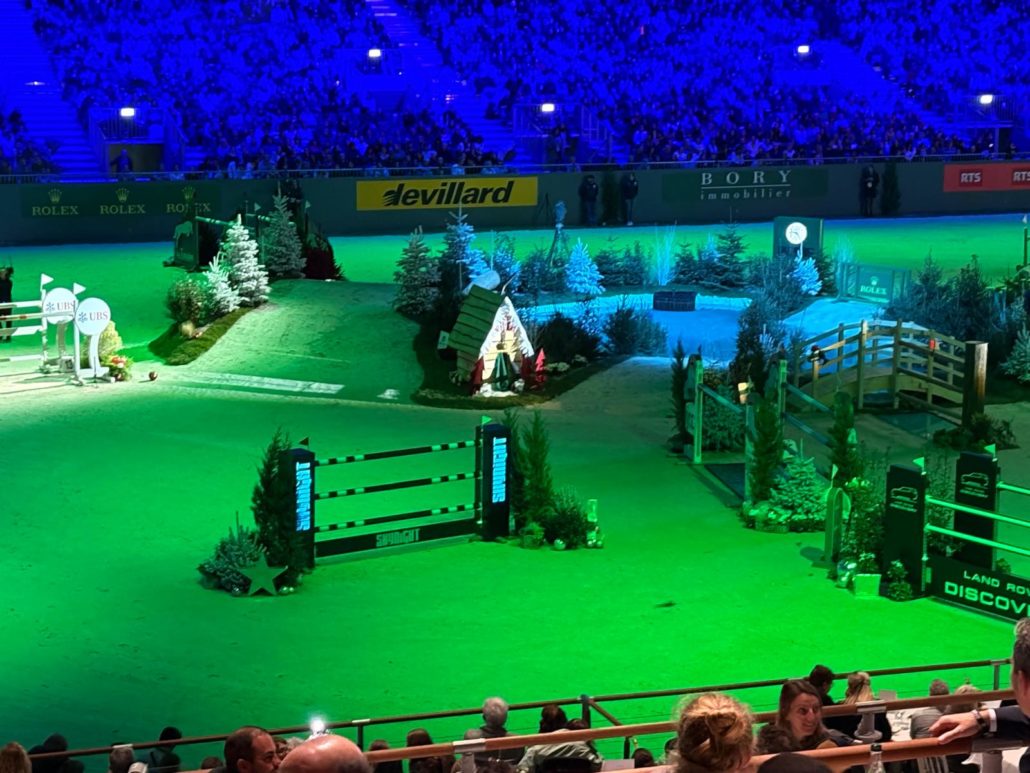
Chaque année, le Concours Hippique International de Genève s’impose comme l’un des rendez-vous majeurs du calendrier équestre mondial. Organisé à PALEXPO, cet événement réunit les meilleurs cavaliers et meneurs de la planète dans un cadre technique et scénographique particulièrement exigeant.
Depuis plus de trente ans, SKYNIGHT accompagne l’Association du CHI de Genève dans la conception et la mise en œuvre des dispositifs audiovisuels du concours. Son, lumière, vidéo et structures sont pensés comme un ensemble cohérent, au service du sport, du public et de la diffusion internationale de l’événement.
À travers cet article, revenons sur les coulisses de la production technique de cette édition, en mettant en lumière les enjeux, les choix techniques et l’organisation nécessaires à la réalisation d’un événement de cette ampleur.
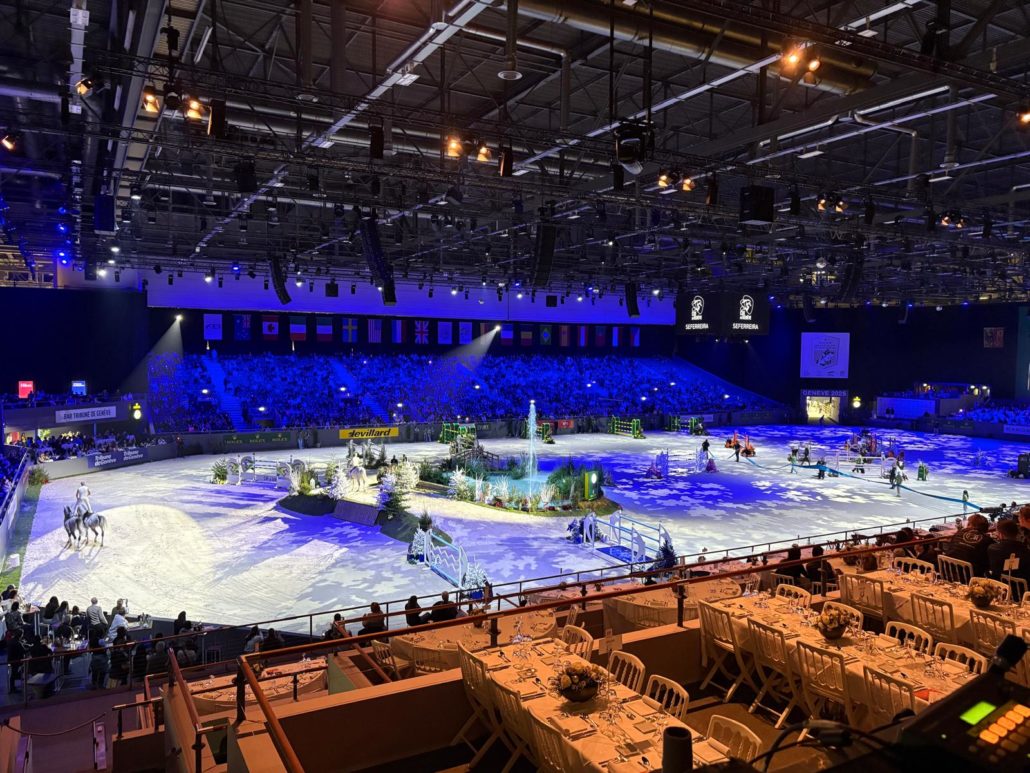
À propos du Concours Hippique International de Genève
Créé en 1926, le Concours Hippique International de Genève figure parmi les compétitions équestres les plus prestigieuses au monde. Fort de près d’un siècle d’histoire, il s’est imposé comme une référence incontournable du saut d’obstacles et de l’attelage indoor.
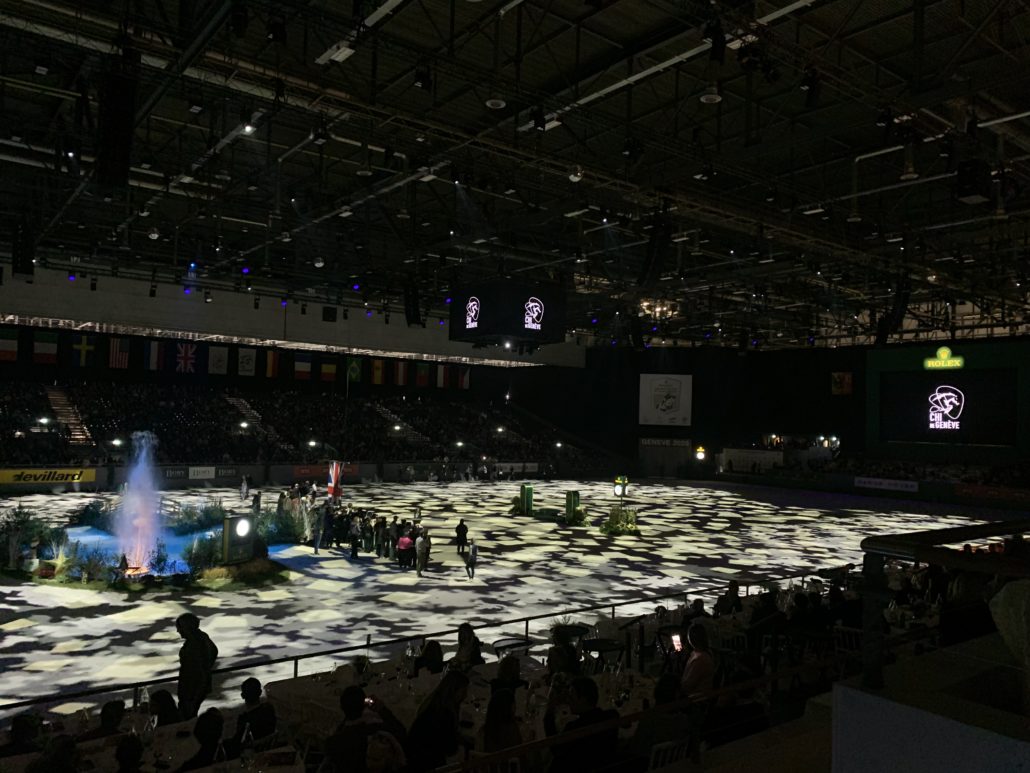
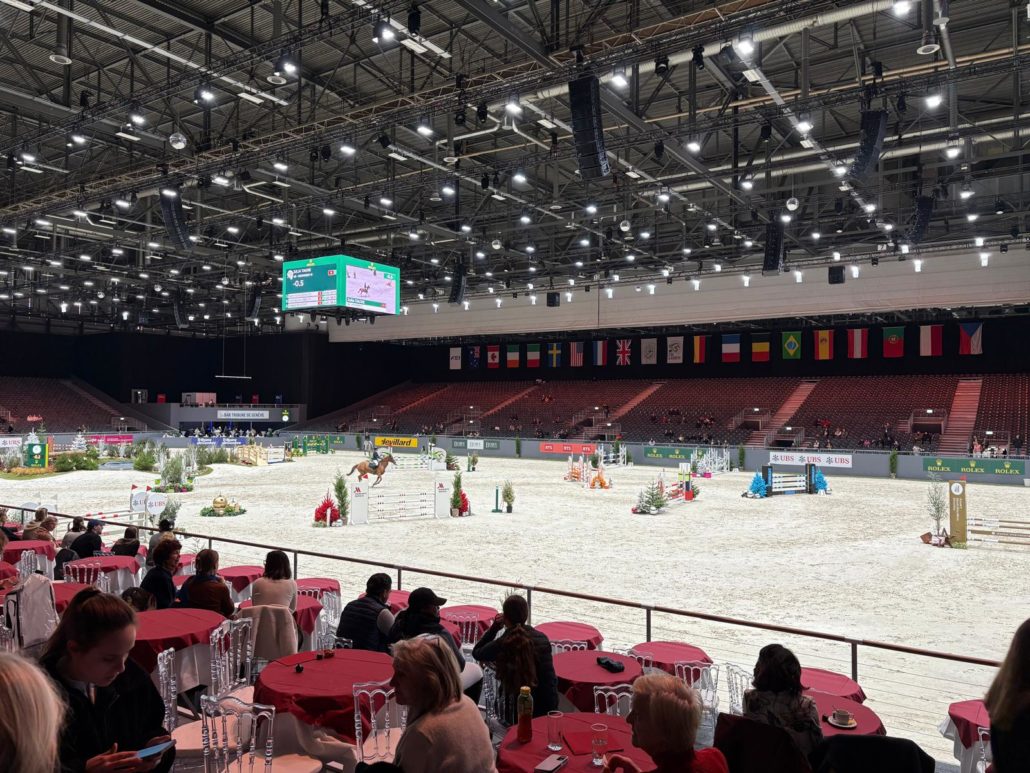
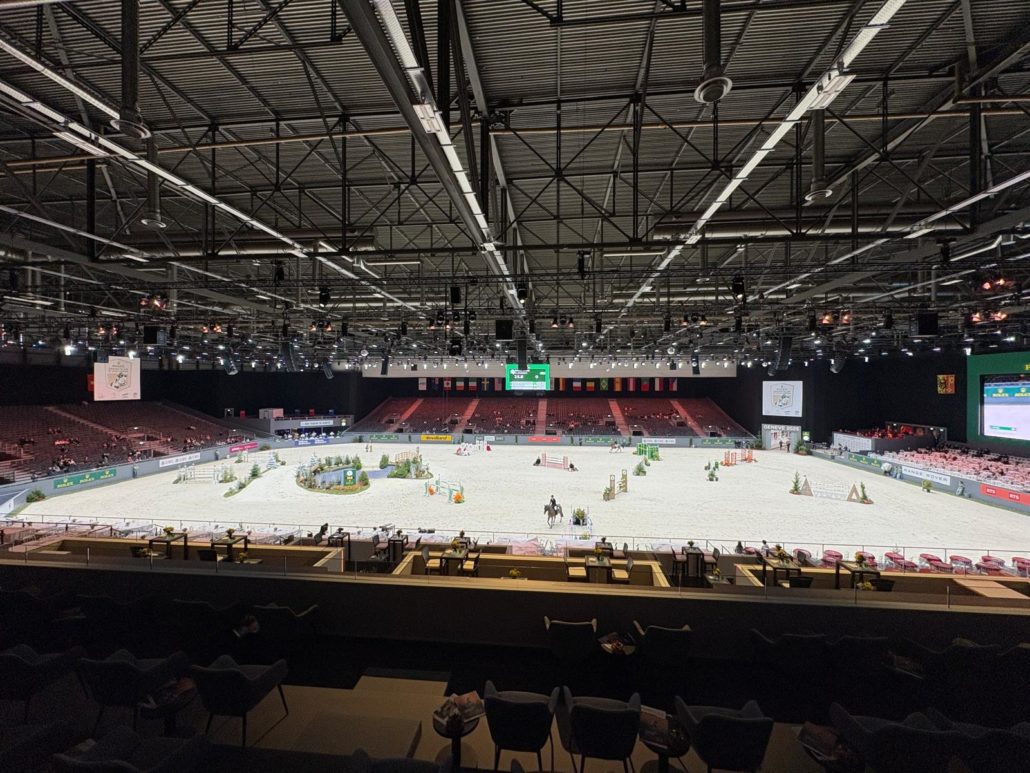
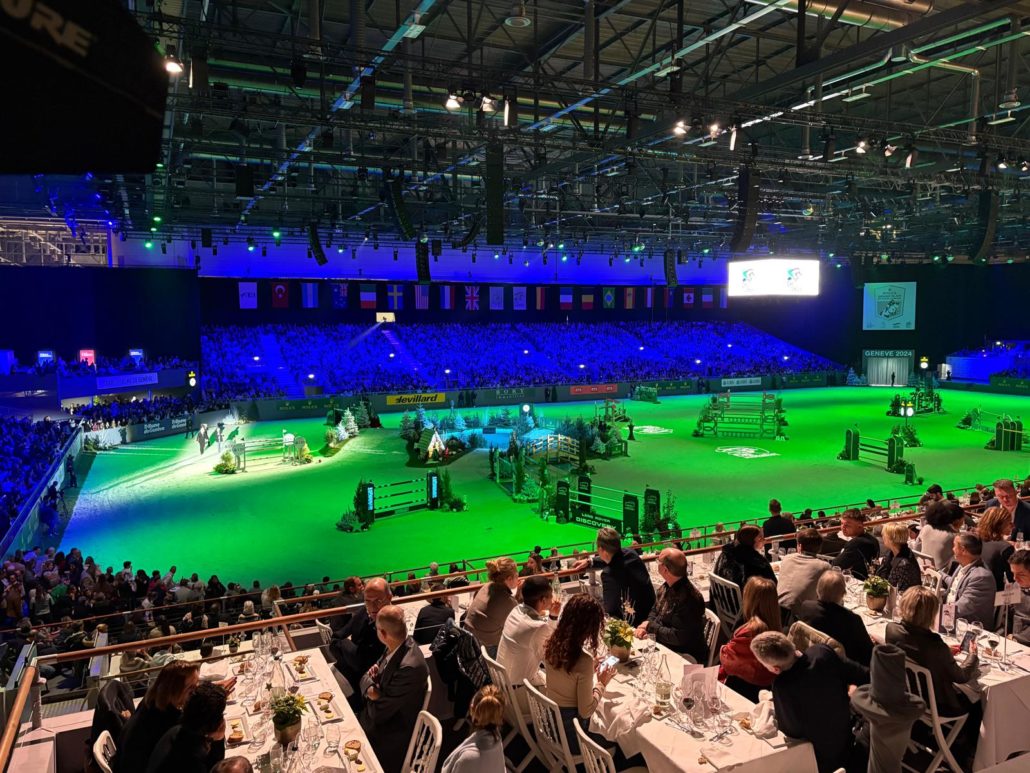
Le CHI de Genève se distingue notamment par la plus grande piste indoor du monde, offrant une surface de compétition exceptionnelle au cœur des halles de PALEXPO. Ce cadre unique permet d’accueillir chaque année un public nombreux, ainsi que les plus grands noms de la discipline, dans des conditions optimales pour la performance sportive et la retransmission télévisée.
Reconnu à de multiples reprises pour la qualité de son organisation, le CHI de Genève fait partie des quatre “Majeurs” du Rolex Grand Slam of Show Jumping, aux côtés des Dutch Masters de Bois-le-Duc, du CHIO d’Aix-la-Chapelle et des Spruce Meadows Masters de Calgary. Ce statut souligne le rayonnement international de l’événement et l’exigence permanente qui l’accompagne.
Véritable vitrine du sport équestre à l’échelle mondiale, le Concours Hippique International de Genève conjugue tradition, innovation et excellence organisationnelle, faisant de chaque édition un rendez-vous attendu par les professionnels, les athlètes et le grand public.
Un événement d’envergure dans un cadre unique
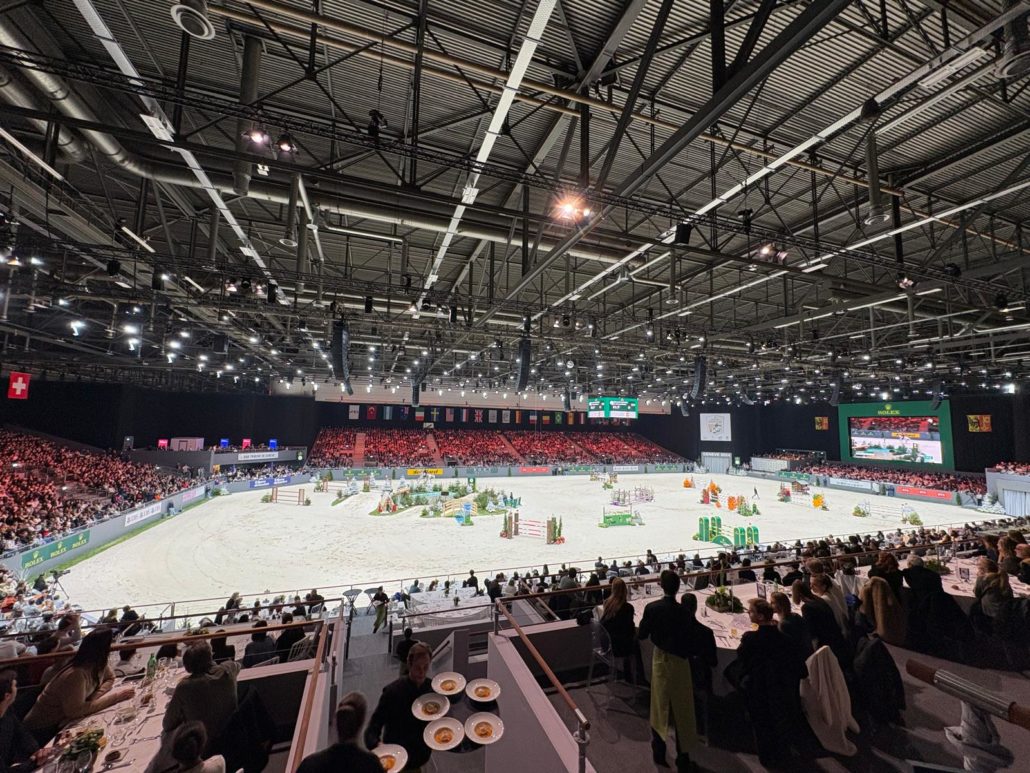
Un site à la hauteur de la compétition
Le Concours Hippique International de Genève se déroule à PALEXPO, un site capable d’accueillir des installations sportives et techniques de grande ampleur. Réparti sur plusieurs halles, le lieu permet l’implantation de la plus grande piste indoor du monde, ainsi que l’ensemble des espaces nécessaires à l’organisation de la compétition.
Des contraintes techniques liées aux volumes
Les dimensions des halles, la hauteur sous plafond et la configuration des espaces imposent une adaptation précise des dispositifs audiovisuels. L’éclairage de la piste, la diffusion sonore et la lisibilité des informations doivent être pensés pour garantir une visibilité homogène, tant pour le public sur place que pour les dispositifs de captation et de diffusion.
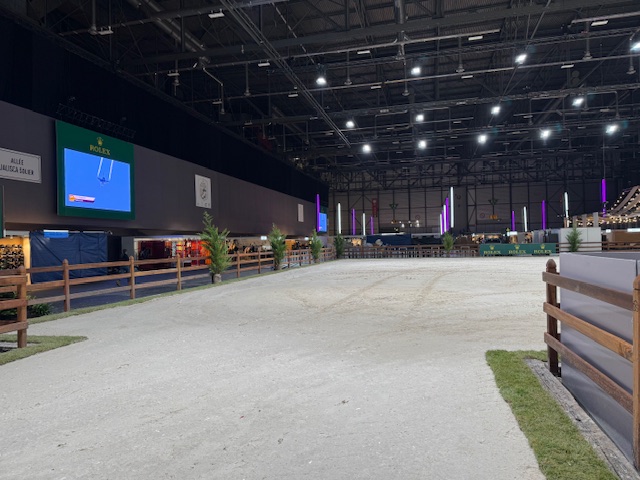
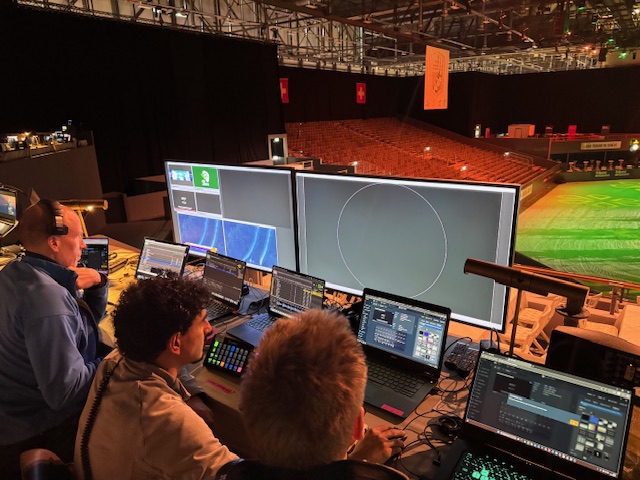
Une organisation collective et coordonnée
La mise en œuvre de l’événement repose sur une coordination étroite entre les différents corps de métier. Chaque intervention s’inscrit dans un planning général rigoureux, intégrant les impératifs de sécurité, les temps de montage, d’exploitation et de démontage, ainsi que les contraintes propres au site de PALEXPO.
La production technique comme élément structurant :
Dans ce contexte, la production technique joue un rôle central. Elle contribue à la fluidité de l’événement, à la qualité des conditions de compétition et à l’expérience proposée aux spectateurs, sur site comme à distance.
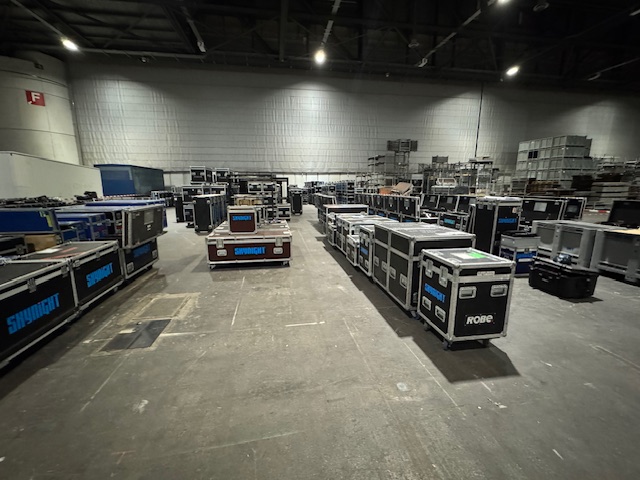
Un partenariat inscrit dans la durée
D’une édition à l’autre, la production technique du CHI de Genève s’appuie sur une continuité opérationnelle. La connaissance du site de PALEXPO, de ses configurations et des contraintes propres au concours permet d’aborder chaque nouvelle édition avec un cadre de travail déjà maîtrisé.
Cette continuité facilite l’anticipation des besoins techniques, l’ajustement des dispositifs et la coordination avec les équipes impliquées dans l’organisation de l’événement. Elle permet également d’intégrer les évolutions du concours sans remettre en cause les équilibres existants.
Au fil des éditions, ce fonctionnement favorise une organisation fluide, un dialogue constant avec l’Association du CHI de Genève et une adaptation progressive des moyens techniques aux réalités du terrain.
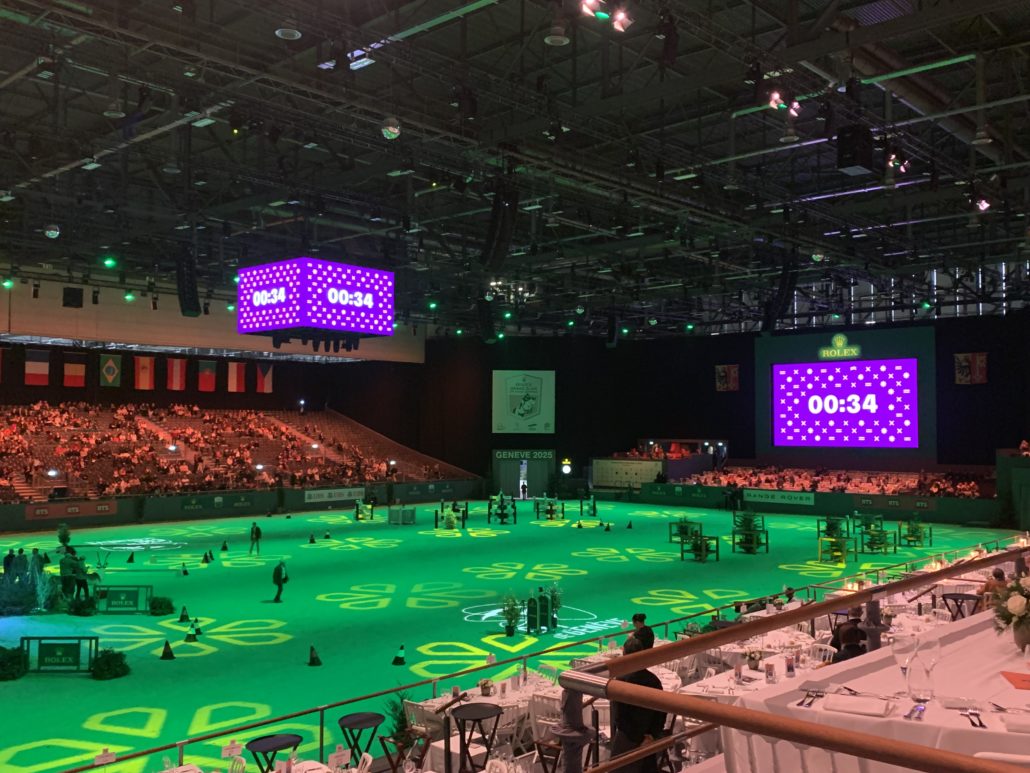
Les enjeux de cette édition anniversaire
Cette édition du Concours Hippique International de Genève s’inscrivait dans un contexte particulier, marqué par les 25 ans du Rolex Grand Slam of Show Jumping. Cet anniversaire impliquait une attention renforcée portée à la mise en scène de l’événement, tout en respectant les codes et les exigences propres à la compétition.
L’enjeu principal consistait à faire évoluer certains dispositifs techniques, sans perturber le déroulement sportif ni les habitudes du public et des équipes. Les choix opérés devaient répondre à des critères précis : fiabilité des installations, conformité aux standards internationaux, qualité de la diffusion pour la télévision et lisibilité des informations en temps réel.
Cette édition a également été l’occasion d’intégrer des équipements de nouvelle génération, notamment en matière de sonorisation et d’éclairage, afin d’accompagner l’évolution des usages et des attentes. Ces évolutions ont été pensées dans une logique d’amélioration continue, en tenant compte des contraintes du site et du calendrier de l’événement.
Enfin, la dimension anniversaire renforçait l’importance de la coordination générale. Chaque ajustement technique devait s’inscrire dans une organisation déjà dense, impliquant de nombreux intervenants et un planning particulièrement structuré.
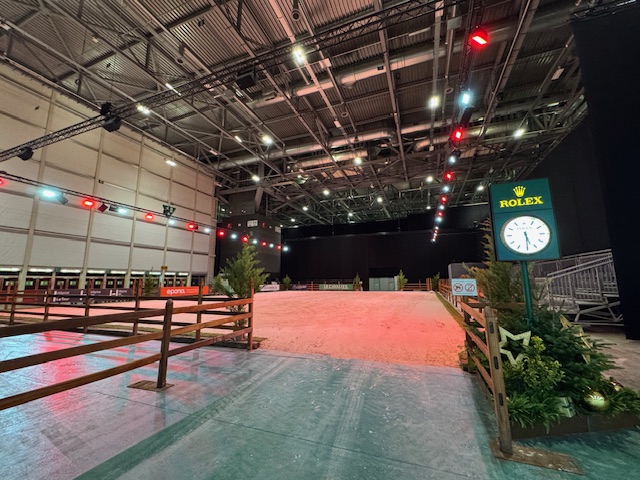
Une production technique globale et coordonnée
La production technique du CHI de Genève repose sur une approche transversale, intégrant l’ensemble des composantes audiovisuelles nécessaires au bon déroulement de la compétition. Son, lumière, vidéo et structures sont conçus comme un dispositif unique, pensé en lien direct avec les contraintes sportives, le lieu et le déroulement de l’événement.
Sonorisation
La sonorisation devait garantir une diffusion homogène sur l’ensemble des halles concernées, tout en assurant une parfaite intelligibilité pour le public, les équipes et les officiels.
Les principaux enjeux :
- couverture sonore adaptée à la surface de la piste et des tribunes
- gestion des niveaux sonores en fonction des temps forts de la compétition
- fiabilité des équipements sur toute la durée de l’événement
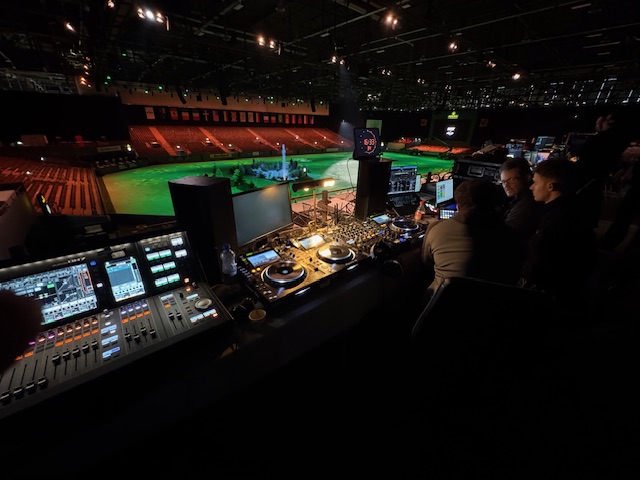
Le dispositif s’appuyait sur un parc de haut-parleurs et de subwoofers répartis de manière à assurer une cohérence sonore, pilotés depuis une régie centralisée.
Éclairage
L’éclairage de la piste constitue un élément central de la compétition. Il doit répondre à des normes précises, tant pour le déroulement sportif que pour la captation et la diffusion télévisée.
Les points clés pris en compte :
- respect du niveau d’éclairement réglementaire au sol
- homogénéité de la lumière sur l’ensemble de la piste
- différenciation entre éclairage sportif et éclairage d’ambiance
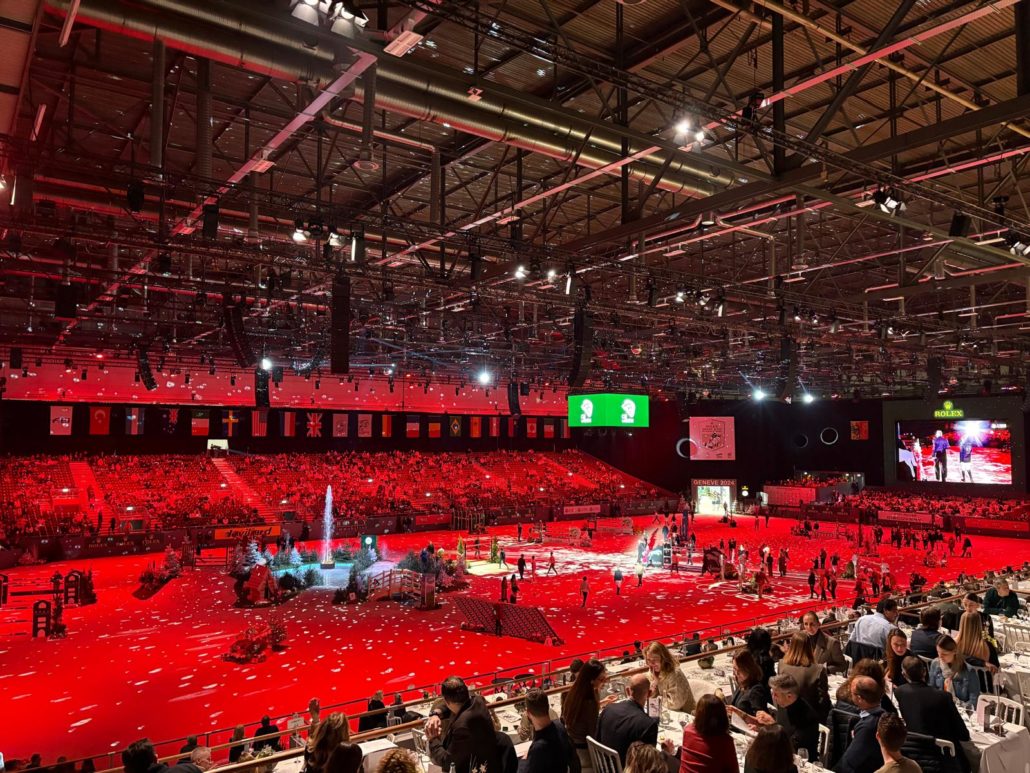
L’installation combinait des projecteurs dédiés à l’éclairage de la piste et des projecteurs automatiques destinés aux séquences scénographiques et aux temps forts.
Vidéo et affichage
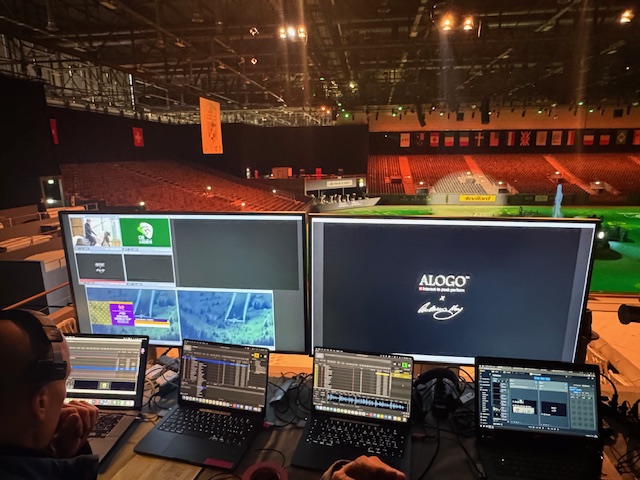
Les dispositifs vidéo jouent un rôle essentiel dans la lecture de la compétition et l’expérience spectateur. Ils assurent la diffusion des images, des informations et du scoring en temps réel.
Le dispositif comprenait notamment :
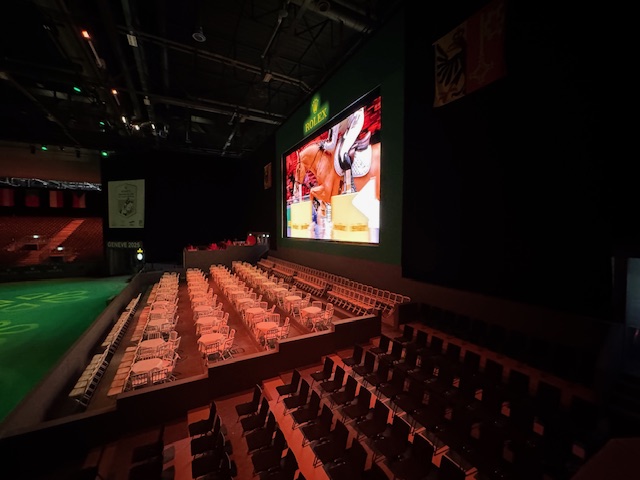
- un mur LED principal implanté face à la piste
- un cube central dédié au scoring
- des écrans complémentaires répartis sur le site
L’ensemble était piloté depuis une régie vidéo permettant une gestion fluide des contenus tout au long de l’événement.
Structures et rigging
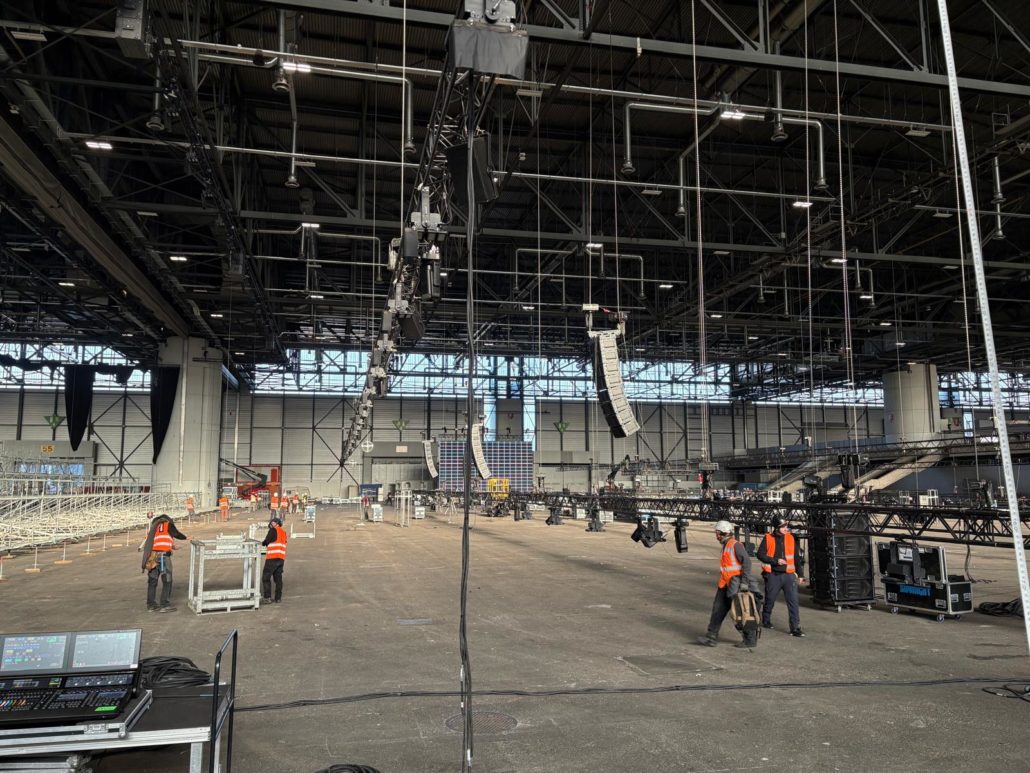
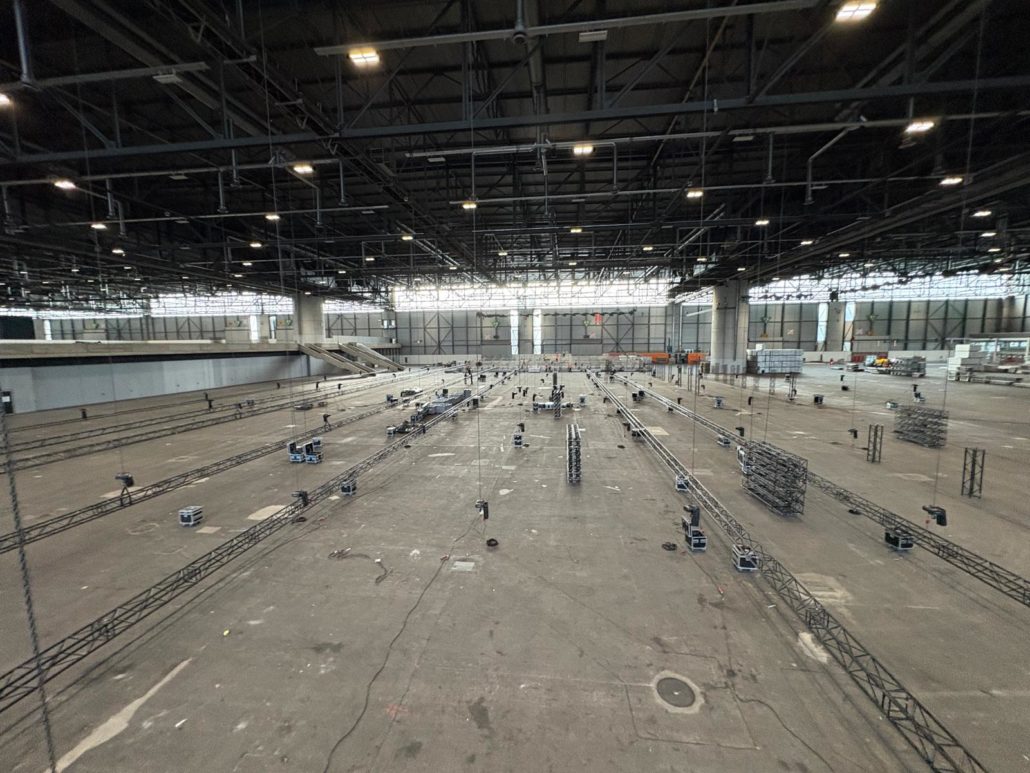
La mise en place des équipements audiovisuels repose sur une infrastructure de structures et de motorisation adaptée aux volumes des halles de PALEXPO.
Les contraintes principales :
- implantation des ponts sur de grandes portées
- répartition des charges et sécurité des installations
- coordination avec les autres installations techniques
Cette phase constitue un préalable indispensable à l’installation du son, de la lumière et de la vidéo.
Coordination des équipes
Au-delà des aspects techniques, la réussite du dispositif repose sur une coordination permanente entre les équipes, du montage à l’exploitation.
Cela implique notamment :
- une organisation précise des phases de montage et de démontage
- une exploitation en continu durant l’événement
- un travail en lien étroit avec les autres corps de métier
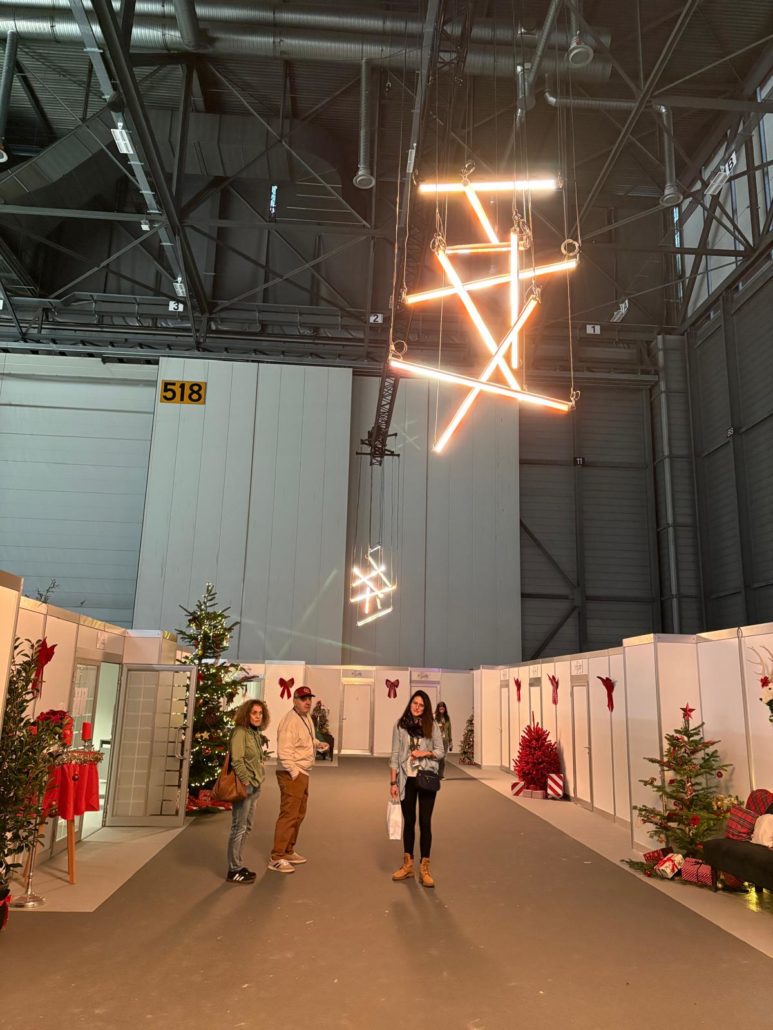
Une organisation structurée, de la préparation à l’exploitation
La mise en œuvre de la production technique du CHI de Genève s’inscrit dans un calendrier précis, réparti sur plusieurs phases successives. Chaque étape est pensée pour garantir la continuité du projet, depuis l’installation des infrastructures jusqu’au démontage final.
La phase de préparation et de montage s’étend sur plusieurs jours et mobilise des équipes dédiées à l’implantation des structures, à l’installation des équipements audiovisuels et aux réglages techniques. Cette période permet de valider l’ensemble des dispositifs avant le début de la compétition.
Durant l’événement, l’exploitation technique repose sur une présence continue des équipes. Les dispositifs sont supervisés en temps réel afin d’assurer la fluidité du déroulement, la réactivité en cas d’ajustement et le respect du programme.
Enfin, le démontage s’effectue dans un temps contraint, en coordination avec les autres intervenants du site, dans le respect des normes de sécurité et du planning général.
Les chiffres clés du projet
- plusieurs semaines de préparation en amont
- 2 semaines de montage sur site
- 5 jours d’exploitation durant l’événement
- 4 jours de démontage
- jusqu’à 50 techniciens mobilisés selon les phases
- plus de 120 haut-parleurs et une vingtaine de subwoofers
- près de 500 projecteurs
- un mur LED principal de 13 × 7,5 m, complété par de nombreux écrans
- plus de 1500 mètres de structures et près de 200 moteurs
Un projet collectif
La réalisation de la production technique du Concours Hippique International de Genève repose sur un travail collectif impliquant de nombreux intervenants. Au-delà des équipes SKYNIGHT, le projet s’inscrit dans une collaboration étroite avec l’Association du CHI de Genève, PALEXPO et l’ensemble des corps de métier mobilisés sur le site.
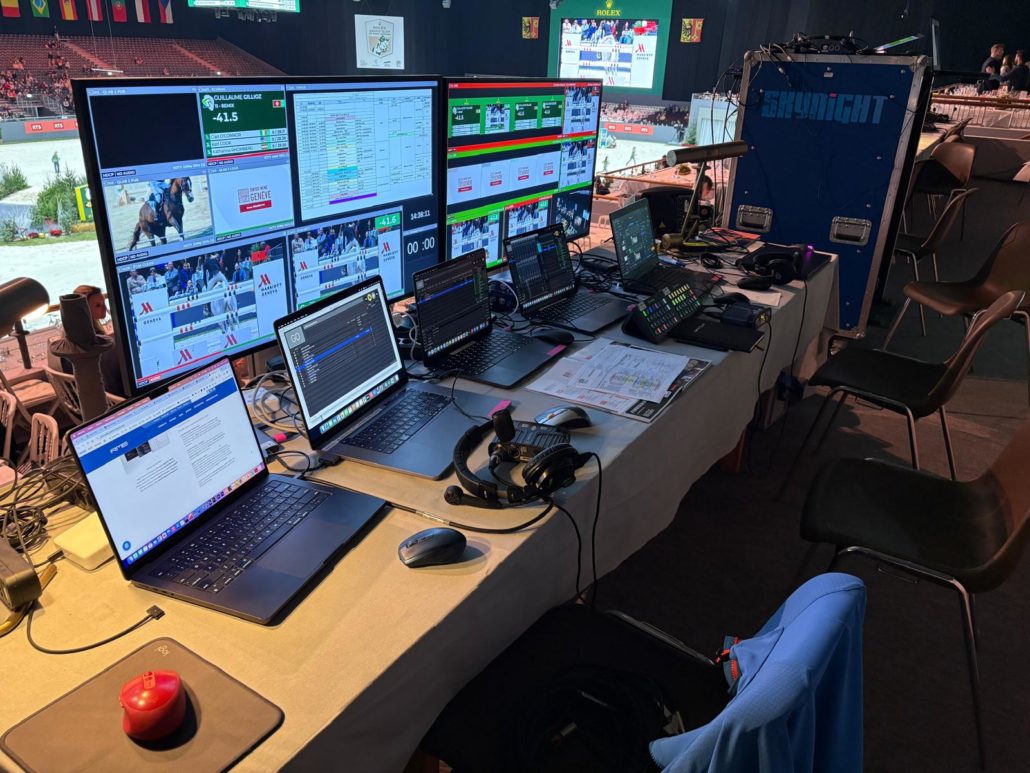
Cette coordination est essentielle à chaque étape du projet. Elle permet d’anticiper les contraintes, d’ajuster les interventions et d’assurer une cohabitation fluide entre les différentes installations techniques, sportives et logistiques. Les échanges réguliers entre les équipes contribuent à maintenir une organisation cohérente tout au long de l’événement.
Dans un contexte aussi dense, la réussite du dispositif repose sur la complémentarité des compétences, la clarté des rôles et le respect du cadre opérationnel défini en amont.
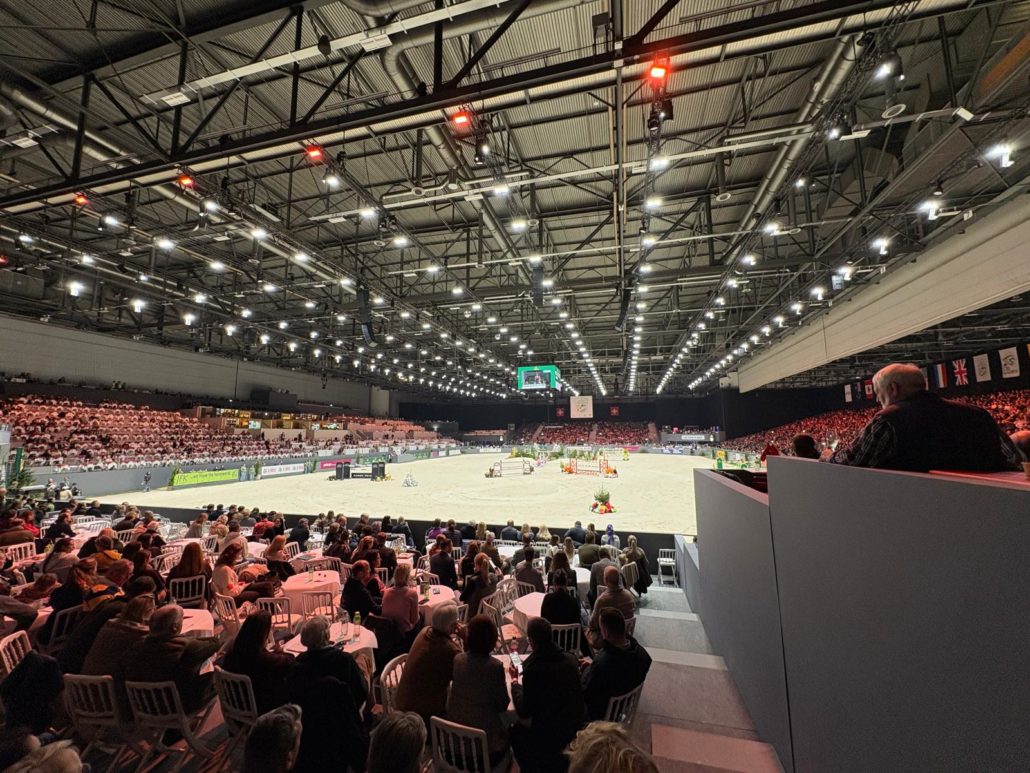
À travers ce projet, SKYNIGHT a assuré la mise en œuvre d’un dispositif audiovisuel global, combinant son, lumière, vidéo et structures, en lien étroit avec les contraintes du site, le déroulement de la compétition et les attentes des organisateurs.
La continuité du partenariat avec le CHI de Genève permet d’aborder chaque édition avec une connaissance approfondie du contexte et une capacité d’adaptation constante, au service du bon déroulement de l’événement et de l’expérience proposée au public.
SKYNIGHT remercie l’Association du Concours Hippique International de Genève (ACHIG) pour sa confiance renouvelée, ainsi que PALEXPO pour la collaboration tout au long de cette édition.
Un remerciement particulier est également adressé à l’ensemble des équipes mobilisées sur le projet, dont l’engagement et la coordination ont permis la réalisation de cette production technique.